Genital Herpes

Genital Herpes-CHHC

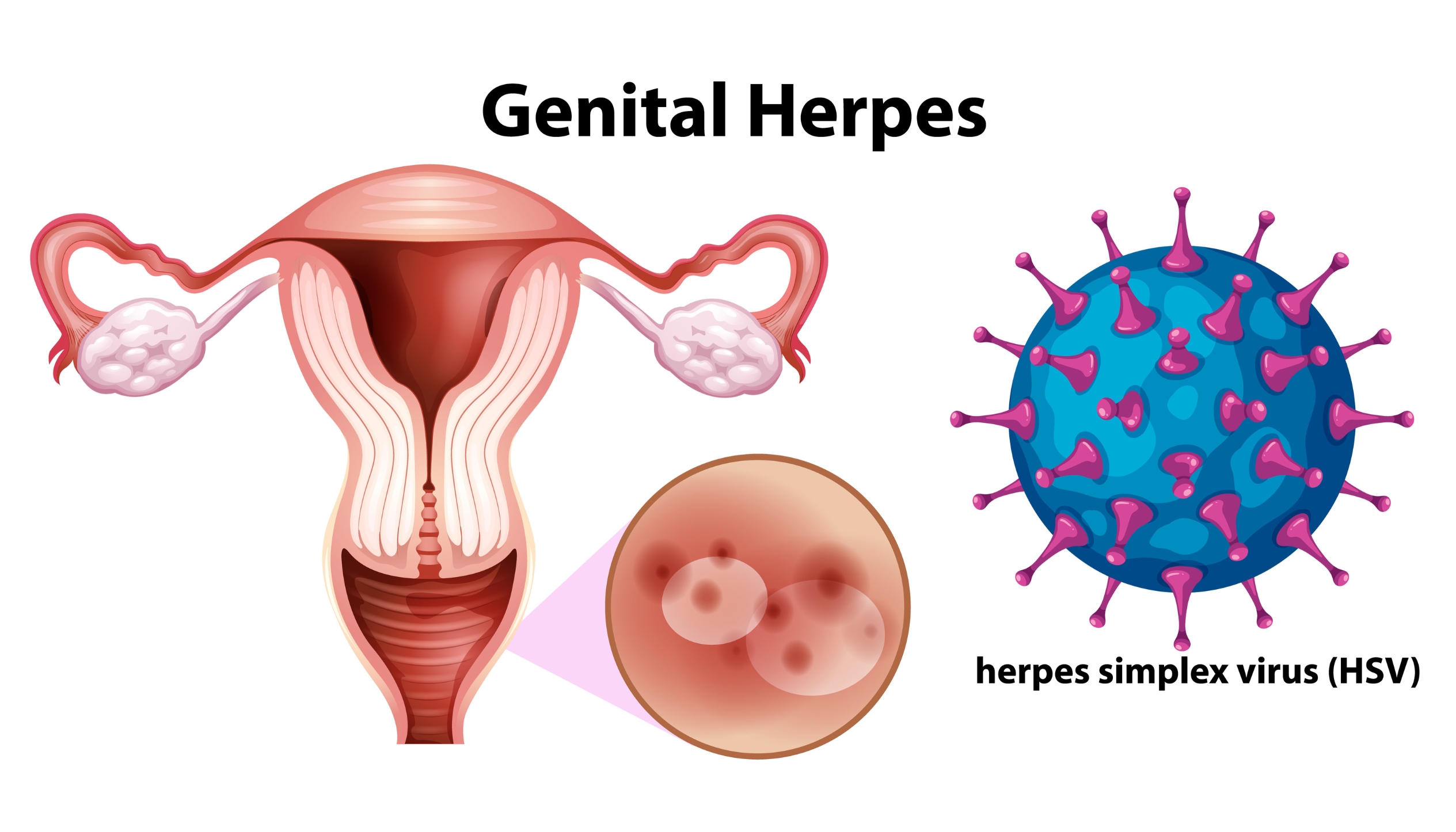
Genital herpes is a common infection that causes sores or blisters on your genitals. The herpes simplex virus (HSV-1 and HSV-2) causes it. Genital herpes is a contagious, sexually transmitted infection (STI) that causes you to develop painful blisters (or sores) on your genitals. The sores can affect your: Vulva (external genitals, including your vaginal lip), Vagina, Cervix, Penis, Testicles, Anus (butthole), Rectum, Buttocks, Groin or inner thigh area.

Causes

The herpes simplex virus (HSV) causes genital herpes. There are two types of HSV: HSV-1 and HSV-2. Both types can give you genital herpes, although HSV-2 causes it much more frequently.

Genital herpes mainly spreads through vaginal, oral and anal sex. But you can also get genital herpes from someone with oral herpes. Oral herpes can spread from the mouth to the genitals and become genital herpes.

Symptoms

Flu-like symptoms, like fever, chills, fatigue and body aches.

Genital itching, burning or irritation.

Painful genital blisters or sores that break open.

Headaches.

Painful urination (dysuria).

Swollen lymph nodes.

Unusual vaginal discharge or discharge from your urethra (the tube that carries urine out of your body).

Genital herpes typically begins as small, blister-like bumps. They tend to appear in a cluster. You may feel itchiness or tingling in the area 24 to 48 hours before a sore appears. The blister will take on a sore or ulcer-like appearance, then eventually open and ooze. Then, a scab will appear as the ulcer heals. Once the ulcers fully heal, the scabs fall off and that outbreak is complete.

Recurrent outbreaks or flare-ups happen any time after the first outbreak (even if it’s years later. But your symptoms are usually less severe, and the outbreak is generally milder and shorter.

Genital herpes can spread through:

Intercourse, including anal, vaginal-penile and vaginal-vaginal.

Oral sex (giving or receiving) with someone who’s infected.

Skin-to-skin genital contact.

Touching open sores, including while breastfeeding.

Childbirth (if you give birth while having an active infection).

 The virus lives dormant (or inactive) in your body, you can get a genital herpes outbreak again (called a recurrence or flare-up). There’s no rhyme or reason as to why some people get more outbreaks and others get fewer. Certain activities tend to reactivate the virus. These include: Stress, Illness, Menstruation, Sun exposure, Surgery.

Diagnosis and Tests

A blood test can check for HSV-1 and HSV-2 antibodies, a marker showing you have the virus in your bloodstream. Also advise a blood test to check for other STIs (syphilis, gonorrhea, chlamydia).

How homeopathy helps:

  • Reduces the severity of outbreaks by reducing size and duration of blisters and promoting faster healing of sores.
  • Increases gap between outbreaks: It aims to reduce the tendency of recurrent eruptions by improving the body’s overall resistance. When the immune response becomes more stable, flares occur less frequently.
  • Controls triggering factors: Homeopathic remedies are selected based on the patient’s constitutional picture, helping regulate emotional stability, stress response, sleep and hormonal balance. Thus, the trigger threshold becomes higher, preventing repeated episodes.
  • Eases pain, burning and discomfort during active phases.
  • Improves immunity and viral resistance by enhancing body’s ability to control the dormant virus, local mucosal immunity and improving defence against triggers like stress, heat, or fever.

Homoeopathic remedies for Genital Herpes

  • Rhus toxicodendron: Widely used for small, fluid-filled vesicles on red, painful skin, and may help prevent recurring illness if given early.
  • Natrum muriaticum: May stop an outbreak if taken in the early tingling stage, especially for raw, red sores that are aggravated by sun exposure or salt intake.
  • Arsenicum album: For eruptions with burning pain that is relieved by warmth; the patient may feel restless and anxious.
  • Hepar sulphuris calcareum: For sores that are extremely sensitive to touch and worse from cold.
  • Graphites: For eruptions that ooze a honey-like discharge and cause crusting and cracking of the skin.
  • Calendulaointment: A topical application used to keep the area moisturized and speed up healing. 

Please note: Homeopathic medicines should not be self-administered. It is essential to consult with an experienced and qualified homeopathic practitioner for optimal therapeutic results and safe treatment.

  • An experienced Homeopath thoroughly evaluates your Past History, Medical History, Family History, Constitutional Assessment (Physical constitution, temperament, and individual characteristics), Lifestyle Factors and Mental & Emotional Status on basis of which the most suitable remedy is prescribed.
  • Always seek consultation with an experienced homeopathic practitioner who can provide proper case taking, remedy selection, and ongoing monitoring to ensure safe and effective treatment tailored to your individual needs.

Natural Healing, Just Around The Corner

Frequently Asked Questions

General Instruction for Taking Homeopathy Medicines
  • All homeopathic medicines are to be taken on or under the tongue & they should be allowed to dissolve completely.
  • Avoid any food item 5 minutes before & after taking the medicines. Water can be consumed.
  • Make sure that the mouth is devoid of any taste or smell when the medicine is to be taken.
  • The quantity of the medicines (pills) is not important but the frequent stimulation is the main criteria.
Is Homeopathy safe for all age groups?
  • All homeopathic medicines are to be taken on or under the tongue & they should be allowed to dissolve completely.
  • Avoid any food item 5 minutes before & after taking the medicines. Water can be consumed.
  • Make sure that the mouth is devoid of any taste or smell when the medicine is to be taken.
  • The quantity of the medicines (pills) is not important but the frequent stimulation is the main criteria.
Does Homeopathy work slowly?
  • All homeopathic medicines are to be taken on or under the tongue & they should be allowed to dissolve completely.
  • Avoid any food item 5 minutes before & after taking the medicines. Water can be consumed.
  • Make sure that the mouth is devoid of any taste or smell when the medicine is to be taken.
  • The quantity of the medicines (pills) is not important but the frequent stimulation is the main criteria.
Can Homeopathy be taken along with allopathic medicine?
  • All homeopathic medicines are to be taken on or under the tongue & they should be allowed to dissolve completely.
  • Avoid any food item 5 minutes before & after taking the medicines. Water can be consumed.
  • Make sure that the mouth is devoid of any taste or smell when the medicine is to be taken.
  • The quantity of the medicines (pills) is not important but the frequent stimulation is the main criteria.
Is Homeopathy just a placebo?
  • All homeopathic medicines are to be taken on or under the tongue & they should be allowed to dissolve completely.
  • Avoid any food item 5 minutes before & after taking the medicines. Water can be consumed.
  • Make sure that the mouth is devoid of any taste or smell when the medicine is to be taken.
  • The quantity of the medicines (pills) is not important but the frequent stimulation is the main criteria.
Take the first step towards natural healing.
Book your personalized homeopathy consultation now.