
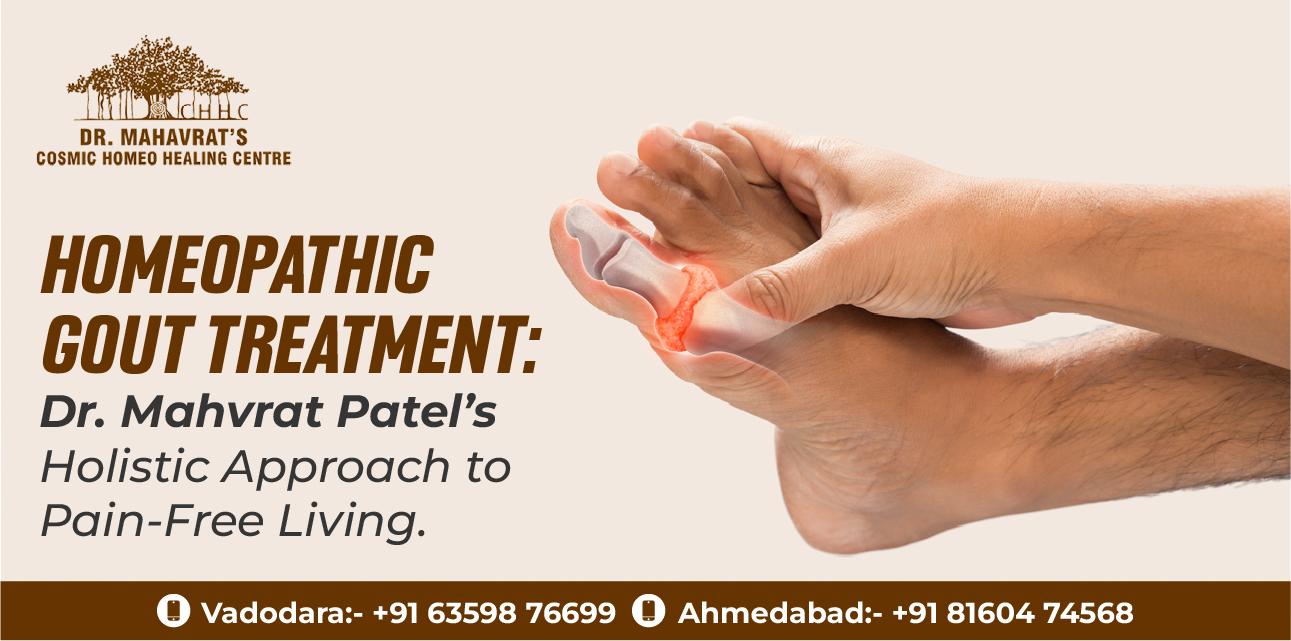
Gout is among the most excruciating joint disorders, marked by sudden, burning attacks that can render even the slightest movement unbearable. It develops when uric acid accumulates beyond the body’s capacity to eliminate it, triggering sharp inflammation, swelling, redness, and extreme tenderness. Although conventional treatments can quickly ease pain, their effects are often short-lived. A homeopathic approach aims to work deeper by improving metabolism, supporting proper protein breakdown, and helping the body manage uric acid more efficiently, thereby reducing the tendency for recurrent gout attacks.
Dr. Mahavrat Patel, a renowned homeopathic expert with more than 40 years of healing experience, has helped countless patients reclaim a pain-free life through personalized, holistic care. His methods focus not just on relieving the pain but restoring balance within the body.
Understanding Gout:
Gout develops when uric acid levels in the blood rise beyond the body’s ability to dissolve and excrete it. This excess uric acid crystallizes into needle-like monosodium urate crystals that deposit in joints and surrounding tissues, triggering sudden and intense inflammation.
Many factors interplay to create the classic gout picture: abrupt onset, severe joint pain, and marked swelling, most frequently in the first metatarsophalangeal joint but potentially affecting any synovial joint.
Several upstream factors contribute to this process:
● Overproduction of uric acid: This occurs when the body breaks down purines at a rate faster than the kidneys can eliminate. High cell turnover states, certain metabolic tendencies, and excessive dietary purines contribute.
● Under-excretion of uric acid: This is the most common cause. When kidneys fail to clear uric acid efficiently, it accumulates in the bloodstream. Dehydration, kidney dysfunction, and certain medications can reduce excretion.
● Dietary excesses: Heavy intake of purine-rich foods such as red meat, organ meats, shellfish, and certain fish increases uric acid load. Sugary beverages and alcohol, especially beer and spirits, further elevate levels by increasing production and reducing excretion.
● Metabolic disturbances: Obesity, insulin resistance, metabolic syndrome, and high triglycerides create a biochemical environment that promotes uric acid buildup.
● Genetic predisposition: Some individuals inherit a reduced ability to handle purines or excrete uric acid, making them more susceptible.
● Lifestyle: Sedentary habits, dehydration, and stress worsen the condition.
● Triggers that precipitate acute attack: A sudden rise or fall in uric acid can provoke crystal shedding into the joint. Common triggers include binge eating, alcohol excess, trauma to a joint, dehydration, fever, or acute illness.
Common symptoms of gout:
Gout presents with a characteristic clinical pattern that helps distinguish it from other joint disorders. Key symptoms include:
1. Sudden, severe joint pain
An acute gout attack usually begins abruptly, often at night or early morning. The pain is intense, burning, or throbbing, and peaks within a few hours. The big toe (first MTP joint) is the most commonly affected site, but ankles, knees, wrists, and fingers can be involved.
2. Marked swelling and warmth
The affected joint becomes visibly swollen, hot to the touch, and extremely tender. Even the weight of a bedsheet can feel unbearable.
3. Redness and discolouration
The overlying skin may appear red, purplish, or shiny. As the attack resolves, the skin may peel, similar to a healing sunburn.
4. Limited joint mobility
Movement becomes difficult due to pain and inflammation. During an acute attack, most patients avoid using the affected joint entirely.
5. Recurrent episodes
Without proper management, attacks may come and go. Over time, the frequency and intensity can increase.
6. Chronic gouty changes (in long-standing cases)
Repeated untreated attacks can lead to:
1) Tophaceous deposits (chalky urate nodules) in joints, ears, or soft tissues
2) Joint deformity
3) Persistent joint stiffness
4) Progressive damage visible on imaging
7. Systemic symptoms in some individuals
Low-grade fever, fatigue, and a general feeling of malaise may accompany severe flares.
Homeopathic Perspective:
With Homeopathy, diseases are treated at their root cause using the methodology developed by Dr. Hahnemann after twenty years of rigorous study, known as the Theory of Chronic Diseases.
Homeopathic remedies, when selected according to the patient’s total symptom picture, aim to:
- Modulate inflammatory response in acute attacks
- Improve metabolic handling of uric acid
- Address gastric and hepatic contributors to purine overload
- Reduce recurrence by acting on constitutional predispositions
This multidimensional action is what positions homeopathy as a supportive modality in managing recurrent gout.
Some commonly used Homeopathic Medicines for Gout include:
● Colchicum: Ideal for severe pain triggered by the slightest movement.
● Lycopodium: Helpful for chronic gout with digestive issues.
● Urtica Urens: Known for reducing uric acid levels naturally.
However, homeopathy is not one-size-fits-all. The most effective remedy depends on the patient’s individual symptoms, lifestyle, emotional health, and medical history. This is where expert guidance becomes crucial.
Dr. Mahavrat Patel’s Approach
At Cosmic Homeo Healing Centre, Dr. Mahavrat Patel blends homeopathy with modern diagnostic understanding. His patient-centred approach includes:
● In-depth Case Analysis: Understanding lifestyle, diet, stress levels, and medical history.
● Individualized Prescriptions: Tailored remedies for long-lasting relief.
● Holistic Integration: Combining homeopathic medicines with lifestyle changes to prevent recurrent gout attacks.
40+ Years of Expertise: His extensive experience enables him to identify patterns and effectively address chronic conditions.
Dr. Patel’s holistic care ensures not just pain relief but improved overall wellness and long-term prevention.
Lifestyle & Complementary Practices
Alongside homeopathic gout treatment, Dr. Patel emphasizes lifestyle and wellness habits such as:
● Dietary Adjustments: Reduce purine-rich foods, alcohol, and sugar; include hydrating foods such as fresh fruits, vegetables, and whole grains.
● Hydration: Drinking enough water helps flush out uric acid effectively.
● Stress Management: Practices like yoga, deep breathing, and meditation support emotional balance.
● Regular Monitoring: Tracking uric acid levels helps prevent sudden flare-ups.
Together, these habits enhance the effectiveness of homeopathic remedies and support long-term health.
Conclusion
Homeopathy offers safe, gentle, and long-term relief for gout by addressing the underlying imbalances that trigger uric acid buildup. With experts like Dr. Mahavrat Patel, patients receive compassionate, personalized care that brings lasting results. If you’re looking for a natural path toward a pain-free life, it may be time to explore homeopathic gout treatment.
Book a consultation with Dr. Mahavrat Patel at Cosmic Homeo Healing Centre and take your first step toward holistic healing.
FAQs
1. How effective is homeopathy for gout?
Homeopathy helps reduce uric acid levels, ease pain, prevent flare-ups, and treat the root cause through individualized remedies.
2. Can homeopathic treatment prevent future gout attacks?
Yes. When combined with proper diet and lifestyle changes, homeopathy can significantly reduce the frequency of attacks.
3. How long does it take to see results?
Acute pain relief may begin within days, but long-term correction of uric acid imbalance may take a few weeks to months, depending on severity.
4. Are homeopathic remedies safe?
Homeopathic medicines are natural, non-toxic, and safe for all age groups when prescribed by a qualified practitioner.
5. Should I stop my allopathic gout medication while taking homeopathy?
No. Dr. Patel advises a gradual, supervised transition. Always consult your doctor before making changes to ongoing medications.